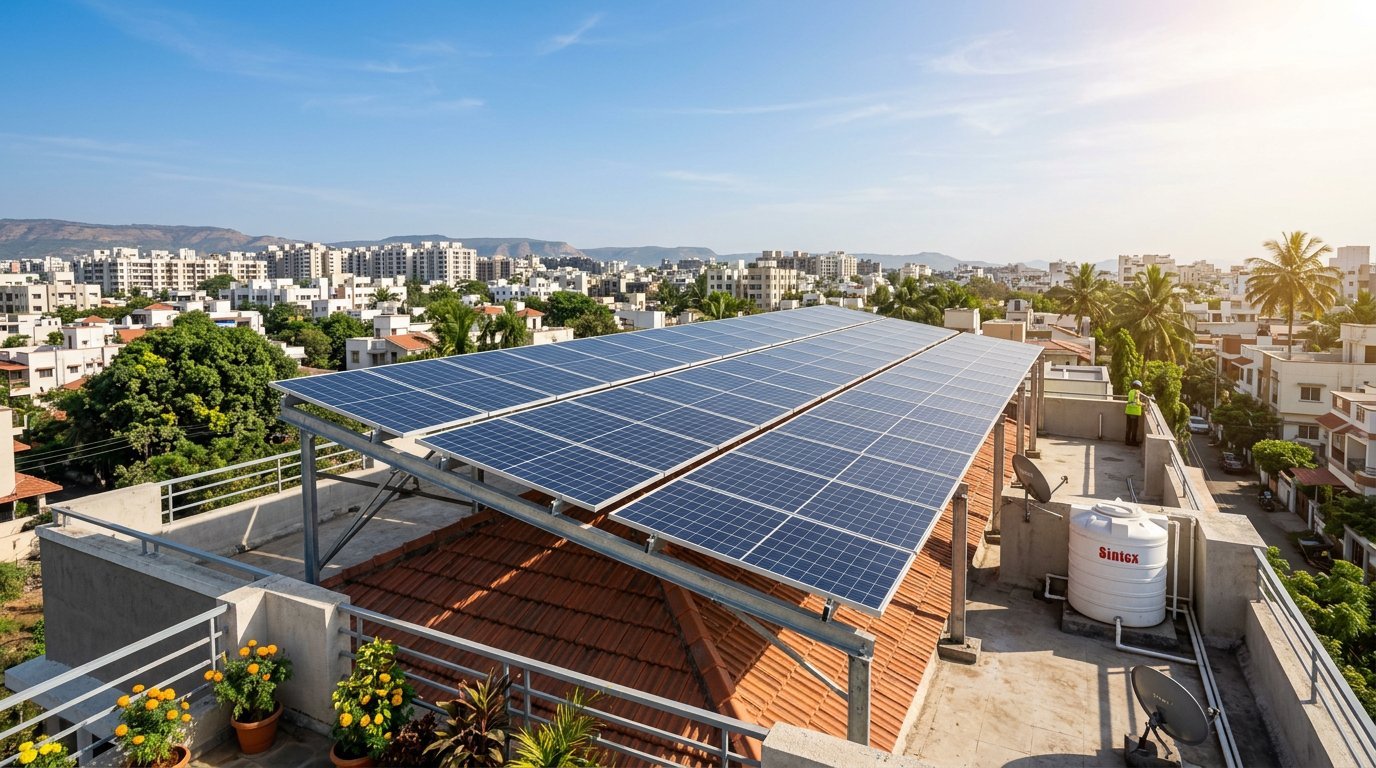
In most of Maharashtra, the biggest avoidable loss in a solar system is not shade or inverter inefficiency — it is dust. A module that has not been cleaned for two months can lose 8–15% of its output, and near highways or industrial areas that figure goes higher.
Recommended cleaning frequency
| Season | Months | Frequency | Reason |
|---|---|---|---|
| Summer | March – May | Every 15 days | Dust storms, pollen, high soiling rate |
| Monsoon | June – September | Once a month | Rain helps, but bird droppings and grime streaks remain |
| Post-monsoon | October – November | Every 15 days | Dust return plus leaf litter |
| Winter | December – February | Once a month | Dew and low-angle sun make clean glass matter more |
So a realistic annual plan is 12 visits, or 6 visits if your area is comparatively clean and you accept a small generation penalty.
How to clean without damaging the modules
- Clean early morning or after sunset — never pour cold water on a hot module, the thermal shock can crack cells.
- Use soft brushes or microfibre, never metal scrapers or abrasive pads.
- Do not use hard-water borewell water: mineral deposits leave a permanent haze that permanently reduces output. Deionised or filtered water is worth the cost.
- Never walk on the modules or rest ladders on the glass.
- Check that the cleaning water does not run into the inverter or DC junction boxes.
Cleaning is 30% of maintenance
A proper annual maintenance visit also includes thermal imaging to catch hotspots, string current checks, earthing resistance measurement, torque checks on structure fasteners, cable tray inspection and an inverter log review. Dust is visible; a loose MC4 connector or a failing bypass diode is not — and those are what cause fires and warranty disputes.
When to hand it to professionals
If your array is on an elevated structure, above a shed, or more than 3 kW, professional cleaning with proper access equipment is cheaper than a fall. If you have a hybrid system with batteries, add a state-of-charge and cell balancing check twice a year.
Solar engineer at EcoHarbor Solar Share on WhatsApp
Need a quotation?
Our engineers will size a system for your exact roof and send a written proposal with subsidy and payback.
Book free surveyEstimate your savings
Use our calculator to see recommended kW, subsidy, net cost and 25-year savings in 10 seconds.
Open calculator